

You have probably seen pictures or videos of alligators and crocodiles and wondered whether they are the same. Many people confuse these two reptiles because they share similar body structures, live in or around water, and have powerful jaws. However, understanding the differences can help you identify them confidently. In this article, you will learn everything about alligator vs crocodile from physical characteristics and behavior to habitat, size, and even their evolutionary background.
By the end, you will not only be able to distinguish between them but also understand why these differences matter for safety, conservation, and wildlife observation. Whether you are a nature enthusiast, a student, or just curious, this guide provides clear and detailed insights.
Table of Contents
Classification and Evolution
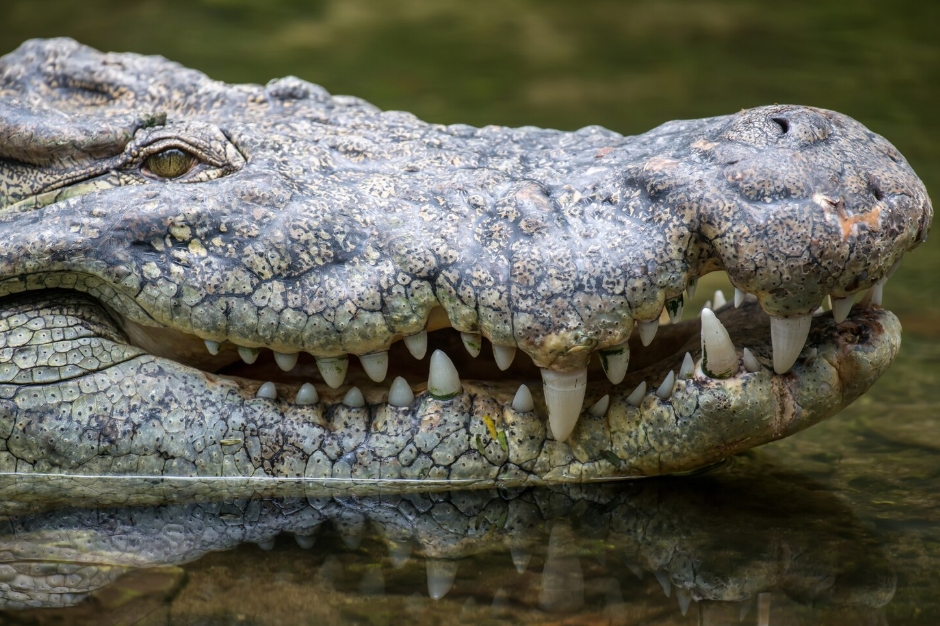
Although both alligators and crocodiles belong to the order Crocodylia, they are classified under different families. Alligators are part of the Alligatoridae family, while crocodiles belong to Crocodylidae. This divergence reflects millions of years of evolution, which has allowed each species to adapt to its environment uniquely.
Alligators are believed to have originated in North America and China, while crocodiles have a broader distribution across Africa, Australia, Asia, and the Americas. These evolutionary differences explain why crocodiles are more tolerant of varied habitats and why alligators are generally restricted to freshwater environments. Over time, physical features like snout shape, teeth alignment, and body structure have evolved to optimize their hunting and survival strategies.
Alligator vs Crocodile Snout
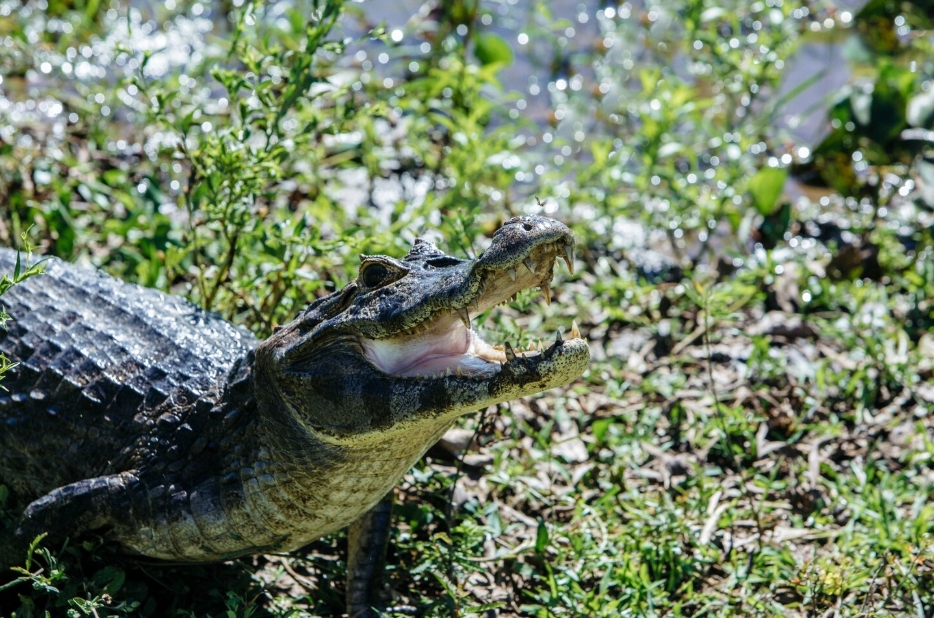
One of the most distinctive features that separates these reptiles is the snout. Alligators have a broad, rounded U-shaped snout, which allows them to exert significant crushing force, ideal for feeding on turtles, fish, and other freshwater prey. This shape also makes their jaws less suited for seizing large mammals.
Crocodiles, in contrast, have a narrower, pointed V-shaped snout, which provides more speed and precision for grabbing a wide range of prey, including birds and mammals. This snout design, combined with visible lower teeth, makes crocodiles look more aggressive and efficient hunters in both freshwater and brackish environments.
Understanding the snout shape is not just a fun fact — it reveals how each species has adapted to its ecological niche and diet.
Physical Appearance and Teeth
Apart from the snout, teeth visibility is another key difference. When an alligator closes its mouth, the upper jaw completely overlaps the lower jaw, hiding the lower teeth. Crocodiles, however, have a prominent fourth tooth in the lower jaw that remains visible even when the mouth is closed. This gives them a more fearsome appearance.
Skin color also differs. Alligators are typically dark gray to almost black, which helps them camouflage in murky freshwater swamps. Crocodiles are lighter — olive, tan, or greenish — with mottled patterns suitable for a wider variety of habitats including rivers, coastal regions, and estuaries.
Crocodiles generally have a leaner and more streamlined body, while alligators have broader bodies and slightly shorter legs. These differences influence swimming style, hunting efficiency, and overall mobility in their respective habitats.
Size Differences
Size is another crucial distinction in alligator vs crocodile. Adult male alligators typically grow between 10 to 15 feet, while females are smaller. The largest recorded alligators reach about 19 feet, but such individuals are extremely rare.
Crocodiles can be significantly larger. Saltwater and Nile crocodiles can exceed 20 feet in length, making them some of the largest reptiles alive today. Larger size also contributes to greater strength, faster swimming speed, and higher aggression levels, giving crocodiles a survival edge in both predator and territorial encounters.
Weight differences are notable as well. Crocodiles tend to be heavier and more muscular, while alligators, though strong, remain comparatively lighter and slower. These size characteristics are important for anyone studying their behavior or observing them in the wild.
Habitat and Distribution
Habitat preference is another factor separating these species. Alligators are primarily freshwater reptiles, inhabiting rivers, lakes, swamps, and marshes. They are most common in the southeastern United States, particularly in Florida and Louisiana, and a small population exists in China.
Crocodiles are far more adaptable. Many species can tolerate saltwater due to functional salt glands, allowing them to live in brackish rivers, estuaries, coastal mangroves, and even near open sea shores. This adaptability contributes to their wide global distribution, from Africa and Asia to northern Australia and the Americas.
The differences in habitat also shape diet, behavior, and interactions with humans. Alligators prefer calm freshwater ecosystems, while crocodiles can hunt in more variable environments, often encountering a wider range of prey.
Behaviour and Temperament
Behavior is another clear point of difference in alligator vs crocodile. Crocodiles are generally more aggressive, territorial, and willing to attack if they feel threatened. This aggression, combined with their size and jaw strength, makes them more dangerous to humans.
Alligators are less aggressive and more likely to avoid confrontation, though they can be highly protective of their young. Hunting styles also vary. Alligators rely mostly on ambush tactics in freshwater, striking quickly at fish, turtles, or small mammals. Crocodiles are versatile hunters, capable of both ambush and active pursuit, and can handle larger prey.
Daily activity patterns differ slightly too. Alligators are often more nocturnal, while crocodiles can spend more time basking in the sun and traveling long distances along riverbanks or coastlines.
Alligator vs Crocodile: Who Would Win
In a hypothetical fight, a crocodile generally has the advantage due to its larger size, stronger bite force, and aggressive nature. Saltwater and Nile crocodiles are especially formidable opponents.
Alligators, though strong and capable, are smaller and less aggressive, making them less likely to dominate in a direct confrontation. However, such encounters are extremely rare because their habitats usually do not overlap significantly.
Alligator vs Crocodile Difference — Quick Comparison
| Feature | Alligator | Crocodile |
| Snout Shape | Broad, U-shaped, rounded | Narrow, V-shaped, pointed |
| Teeth Visibility | Upper teeth visible, lower hidden | Both upper and lower teeth visible, especially the lower 4th tooth |
| Skin Color and Texture | Dark gray to almost black, blends with murky freshwater | murky freshwater
Olive, tan, or lighter, often mottled for camouflage |
| Habitat Preference | Freshwater: rivers, lakes, swamps, marshes | Saltwater, brackish water, coastal mangroves, estuaries, and freshwater |
| Size (Adults) | Up to 13 to 15 feet (4 to 4.5 meters) | Many species exceed 20 feet (6 meters) |
| Behaviour and Temperament | Generally reserved, less aggressive | More aggressive, territorial, potentially more dangerous |
Conclusion
Understanding alligator vs crocodile helps you appreciate wildlife, stay safe around water bodies, and respect these ancient reptiles. Although they share a common ancestry, distinct differences in snout shape, skin color, habitat preference, teeth visibility, size, and behavior make them easy to tell apart.
Next time you see a large reptile near water, observe carefully. A wide U-shaped snout, dark skin, and calm freshwater may indicate an alligator, while a narrow V-shaped snout, lighter coloring, and brackish or coastal water could indicate a crocodile. Treat these animals with respect and caution, and you will enjoy observing one of nature’s oldest and most fascinating predators.
Frequently Asked Questions (FAQ)
Q1. Can an alligator and a crocodile interbreed?
No. They belong to different families and cannot produce offspring.
Q2. Where can you find both alligators and crocodiles together?
Overlap is rare. Certain areas in South Florida allow both species to exist in the same freshwater habitats.
Q3. Are crocodiles always bigger than alligators?
Generally yes, though size varies by species. Crocodiles usually grow larger than alligators.
Q4. Is snout shape alone enough to tell them apart?
Snout shape is a good clue, but it is best to also check teeth visibility, skin color, and habitat.
Q5. Why can crocodiles live in saltwater but alligators cannot?
Crocodiles have functional salt glands that remove excess salt, allowing them to survive in brackish and saltwater. Alligators’ glands are less effective.

RELATED ARTICLES



Latest Articles
 People Over Papers: Protecting Immigrant…In General
 Budget Vs. Quality: Comparing Pre-school…In Business
 Instagram IP Address Blocked: How Long I…In Technology
 Fast, compliant global background screen…In Tech Startups
 Balancing Investment and Protection with…In Insurance
 Japan Tour Packages for Travellers Who W…In Tips
 Getting What You Need: Align Your Action…In General
 Preventing Dust Damage With Proper Lapto…In Gadgets