The way companies plan work trips have changed a lot over the years, especially with tools that let anyone book flights or hotels in minutes. Still, the role of a corporate travel agent hasn’t disappeared—it has simply shifted into something more strategic than just making bookings. Businesses today are not only looking for convenience but also control, visibility, and consistency across employee travel.
Recent industry research from the Global Business Travel Association (GBTA) shows that global business travel spending crossed $1.4 trillion in recent years, highlighting how important structured travel management has become for companies of all sizes. With so much money involved, relying only on scattered bookings often leads to inefficiencies, making professional support relevant even in a tech-driven setup.
What a Corporate Travel Agent Actually Does Today
A modern travel agent working with businesses is no longer just someone who books tickets on request. Their work now involves understanding company travel policies, negotiating better rates, and ensuring that employees follow a structured process when planning trips. They act more like advisors who know how to balance employee convenience with company budgets.
There is also a problem-solving angle that many people overlook. When a flight gets delayed or a last-minute change happens, employees rarely have the time or patience to fix things themselves. This is where agents step in quietly and handle disruptions without creating chaos. Over time, this kind of support becomes less of a luxury and more of a necessity.
How a Corporate Travel Agency Differs from Regular Travel Services
At first glance, booking a business trip might seem similar to planning a personal holiday, but the expectations are completely different. A corporate travel agency operates with systems that go beyond simple bookings. They focus on reporting, approvals, policy compliance, and centralized tracking.
Unlike regular travel services, these agencies often integrate with company systems or work alongside platforms that allow businesses to monitor spending patterns. This makes it easier to identify where money is going and whether there are ways to optimize costs without affecting employee experience. It’s not just about booking cheaper tickets—it’s about building a smarter travel ecosystem.
Pros and Cons of Using an Agent vs Doing It Internally
Many companies consider handling travel internally, especially when they feel online tools are enough. In some cases, it works fine, particularly for smaller teams with limited travel needs. Employees can book their own tickets, submit reimbursements, and move on.
But as the number of trips increases, things start getting messy. Costs become harder to track, approvals get delayed, and policies are often ignored unintentionally. While agents add a layer of cost, they also bring structure, accountability, and time savings that are difficult to replicate internally. The decision often comes down to scale—what works for five employees may not work for fifty.
Common Mistakes Businesses Make Without Expert Help
One of the most common mistakes companies make is assuming that cheaper bookings always mean better savings. In reality, last-minute changes, cancellations, or missed connections often end up costing more than expected. Without proper planning, businesses also miss out on negotiated deals or corporate discounts.
Another issue is the lack of centralized data. When employees book trips independently, there is no single place to track expenses or analyze patterns. This leads to poor decision-making because companies don’t have a clear picture of their travel spend. Over time, these small inefficiencies add up and create unnecessary financial pressure.
Where Technology Fits into the Process
Technology has definitely changed how travel is managed, but it hasn’t replaced human expertise completely. Instead, it has created a middle ground where tools and agents work together. Platforms now allow employees to book trips within a controlled environment, while agents oversee the process and step in when needed.
MyBiz as a Bridge Between Traditional and Digital Booking
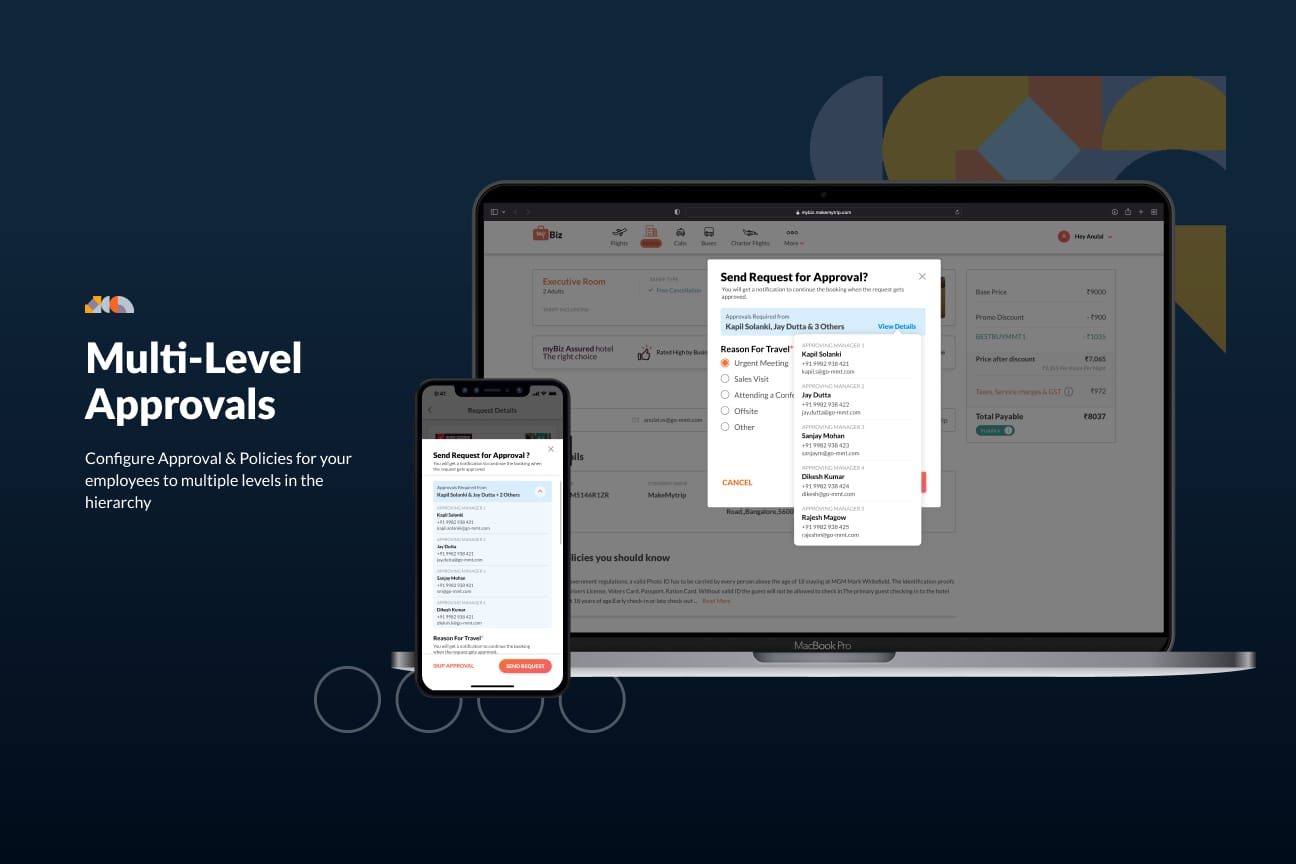
This is where solutions like MyBiz come into the picture. Instead of forcing companies to choose between agents and technology, it blends both approaches into a single system. Employees can book their trips through a structured platform, while businesses still retain visibility and control.
MyBiz also reduces the dependency on constant back-and-forth communication. Approvals, bookings, and reports happen in one place, which makes the entire process smoother. At the same time, it doesn’t remove the value of expert guidance—it simply makes it more accessible and less intrusive.
Real Scenario: Managing Multiple Employee Trips at Once
Imagine a mid-sized company where several employees need to travel to different cities in the same week. Without a structured system, this turns into a coordination nightmare. Flights overlap, hotel bookings get mixed up, and reimbursements pile up later.
With the support of a managed system like MyBiz, combined with agent expertise, everything becomes more organized. Bookings follow a standard process, policies are automatically applied, and managers have visibility into every trip. Instead of reacting to problems, the company stays ahead of them.
Cost Control and Policy Compliance Made Easier
One of the biggest advantages of using professional support is better control over spending. When bookings happen within a defined system, it becomes easier to ensure that employees are choosing options that align with company policies.
This doesn’t mean restricting employees unnecessarily. It simply creates a framework where decisions are guided rather than random. Over time, this leads to consistent savings without compromising on travel comfort. Companies also gain access to reports that help them refine their policies based on actual data rather than assumptions.
Final Thoughts on Choosing the Right Support System
Businesses don’t necessarily need to choose between agents and technology anymore, as the best results often come from combining both in a balanced way. While digital tools simplify bookings, expert support adds structure and reliability to the process. The right approach depends on how frequently a company travels and how much control it wants over expenses.




Latest Articles
 What Does Igh Mean in Text? Decode This …In Social Media
- What Does GNG Mean in Texting? 2 Meaning…In Social Media
- Buying a Used Car? Your Insurance Quote …In Insurance
- TW Meaning in Chat: Why Is Everyone Usin…In Social Media
- What Does WYFF Mean? Slang Meaning, Text…In Social Media
- Health Insurance Premium Estimator: What…In Insurance
- Gonzay.com: The Complete Guide to Guest …In Digital Marketing
- Roland von Kurnatowski Sr.: Theo Von’s D…In Biography