“Almost” Beats “Win” More Often Than People Realize and the Brain Has a Reason for It
vinay May 26, 2026 0 COMMENTS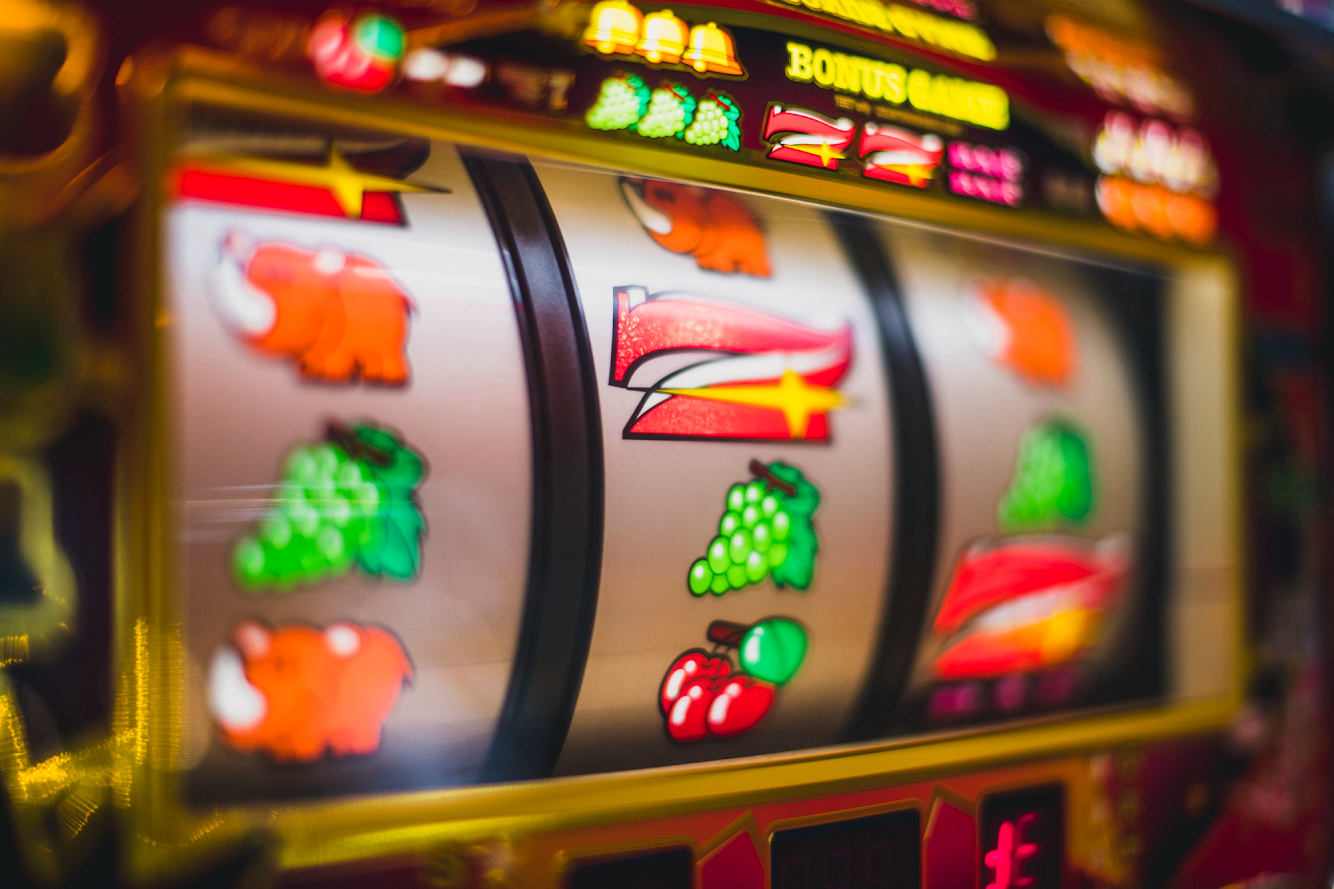
Watch what happens after a near-miss on a slot machine. The reels stop one symbol short. Two of three scratched symbols match. In a significant proportion of cases, the player doesn’t walk away – they go again. The strange part, the part that took researchers decades to appreciate, is that a near-miss often produces more motivation to continue than a small actual win does.
This is not a coincidence of game design, though designers have learned to exploit it. It’s a feature of how the human brain processes incomplete outcomes, with roots in reward circuitry that predates casinos by hundreds of thousands of years. Understanding it doesn’t make you immune. That gap between knowing and feeling is precisely what platforms like spinfin in the gaming space understand well – and what makes the mechanism worth examining closely.
What a Near-Miss Actually Is
In the research literature, a near-miss is an outcome that falls short of a target but lands closer to it than chance alone would predict. In a truly random system, near-misses occur only as probability dictates. Many gaming systems produce them more frequently – because near-misses were observed, long before anyone had neuroscience to explain why, to keep players engaged in ways outright losses did not. What makes this psychologically odd is the reaction. A clear loss – three unrelated symbols – is processed as failure. A near-miss is also a loss: nothing was won. And yet the brain does not process it the same way.
Why the Dopamine System Responds Differently
The relevant brain system is the mesolimbic dopamine pathway, primarily responsible for reward anticipation. Research from Wolfram Schultz’s lab in the 1990s established something surprising: dopamine neurons respond most strongly not to rewards themselves but to reward prediction errors. When something good happens unexpectedly, dopamine spikes. When an expected reward fails to arrive, it drops below baseline. When a reward almost arrived, the system fires somewhere between those two states – partial fulfillment rather than outright failure. The brain reads the near-miss as evidence the reward is attainable. Neurologically, it resembles the signal from almost succeeding at a skill – “closer, try again” rather than “failed, stop.”
Beyond Casinos
The near-miss effect describes something broader than gambling. It captures how brains engage with any variable, probabilistic system – and those systems now surround daily digital life. Video games figured this out early. Keeping players perpetually “almost” – almost enough XP to level up, almost enough currency for the next item – is a direct application of the near-miss principle applied to skill contexts. The key distinction is that in skill-based systems, “almost” is usually honest: it reflects genuine proximity to a goal. In chance-based systems, “almost” can be a manufactured artifact rather than real closeness to winning.
| Context | How Near-Miss Appears | Typical Response | Honest Signal? |
| Slot machine | Weighted reel stop | Continued play | Often no |
| Scratch card | Symbol frequency design | Re-purchase | Sometimes |
| Video game level | Skill gap narrowing | Renewed effort | Usually yes |
| Sports accumulator | One leg missed | Next bet | Partially |
| Mobile puzzle | One move short | Retry | Yes |
The honesty column matters because it separates contexts where “almost” carries real information from contexts where it’s engineered. The brain cannot reliably distinguish between the two. The same dopamine signal fires whether the near-miss reflects genuine proximity or a designed probability distribution. The feeling is identical. The meaning is not.
What Awareness Actually Changes
The uncomfortable finding from the research is that knowing about the near-miss effect does not reliably neutralise it. Studies that explain the mechanism to participants before exposing them to near-miss sequences find the motivational effect persists regardless. The dopamine signal fires faster than conscious evaluation can contextualise it.
Understanding the mechanism does have value, but that value is structural rather than reactive. Deciding in advance how many attempts you’ll make – and committing to that number before the first outcome – is more effective than trying to re-evaluate each near-miss as it occurs. The brain will generate the “almost, go again” signal every time. The question is whether a prior commitment exists that doesn’t require overriding that signal in the moment.
The Evolutionary Mismatch
The near-miss effect is not a flaw in cognition. It evolved to keep animals persisting when success was genuinely close – when prey had almost been caught, when food was almost within reach. Persistence in those contexts improved survival. The signal “you’re close, keep going” was adaptive because closeness was honest.
What changed is the environment, not the brain. In contexts where “almost” is engineered rather than earned, the same signal fires in response to something that doesn’t warrant it. The mechanism works exactly as it was built to work. The problem is the gap between what it evolved to respond to and what it now encounters. That gap is what makes the near-miss effect worth understanding – not because the knowledge stops it, but because it changes how you build the structure around your choices before the reels ever start spinning.



Latest Articles
 Arattai App Review: What Makes It Differ…In App
- How to set up the electronics on a fishi…In Automotive
- SYFM Meaning Explained: Is This Texting …In Social Media
- How Much Working Capital Do You Need Acc…In Business
- What Does NM Mean in Text Message? Know …In Social Media
- Best Premium Laptops for Productivity &#…In Tech
- What Does ICL Mean in Texting? Meaning, …In Social Media
- What Does Igh Mean in Text? Decode This …In Social Media