
The Difference Between a Gimmick Face Swap and One That Actually Holds Up to Scrutiny
varsha April 8, 2026 0 COMMENTS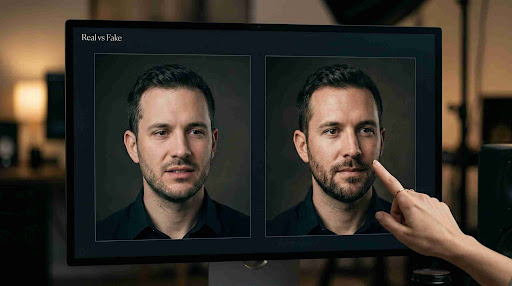
Face swap has had a reputation problem for years.
Not because the idea is flawed, but because the execution often was.
For a long time, most people associated it with novelty. Something entertaining, sometimes impressive, but rarely something you could rely on. It lived in the same category as filters and experimental edits. Fun to use, easy to share, but not something you would trust in a professional context.
That perception didn’t come from nowhere.
It came from what people actually saw.
Why Most Face Swap Content Still Feels “Off”
Even today, you can spot a weak face swap almost instantly.
You might not be able to explain exactly what’s wrong, but something feels unnatural. The lighting is slightly mismatched. The skin tone doesn’t fully align. Edges feel too sharp or too soft. Expressions don’t sit naturally within the scene.
These are small details, but they matter.
Because the human brain is extremely good at detecting inconsistencies in faces.
This is the same reason why discussions around Deepfake technology have focused so heavily on realism. When something looks almost real but not quite, it creates discomfort instead of believability. You can see this tension in how synthetic media has evolved, including in broader discussions like deepfake technology.
The gap between “almost convincing” and “fully convincing” is where most tools fail.
The Gimmick Layer
Gimmick face swap operates on a simple idea.
Take a face. Place it onto another image. Adjust it just enough to make it recognizable.
That approach works for casual use.
It works for:
- Social content
- Memes
- Quick edits
But it breaks under scrutiny.
Why?
Because it treats the face as an isolated layer.
The system doesn’t fully understand the environment it’s placing that face into. It reacts to the image rather than integrating with it.
So even if the result looks acceptable at a glance, it doesn’t hold up when you look closer.
Where the Illusion Breaks
There are a few consistent failure points in low-quality outputs.
Lighting mismatch is the most obvious. The face may be well rendered, but it doesn’t reflect the same light conditions as the rest of the image.
Then there is texture inconsistency. Skin detail doesn’t match surrounding elements. It can look too smooth or artificially sharp.
Expression alignment is another issue. The face may not fully match the posture or motion implied in the original image.
None of these issues are dramatic on their own.
But together, they break the illusion.
And once the illusion breaks, the content loses credibility.
What “Holding Up to Scrutiny” Actually Means
A high-quality face swap is not judged at first glance.
It is judged under attention.
It needs to survive:
- Close inspection
- Repeated viewing
- Use across multiple contexts
In commercial environments, this matters even more.
An image might be:
- Used in ads
- Resized across formats
- Viewed on high-resolution screens
Any inconsistency becomes more visible.
So the real standard is not “does it look good?”
It is “does it still look real when you look twice?”
The Shift From Placement to Integration
The difference between gimmick and production-grade output comes down to one thing.
Integration.
Instead of placing a face into an image, the system needs to understand how that face exists within the scene.
That includes:
- Light direction
- Color balance
- Texture consistency
- Structural alignment
When working with Face Swap, the process is not about overlaying identity. It is about adapting identity within the visual context so it behaves as part of the image rather than something added afterward.
That shift is what allows the result to hold up under scrutiny.
Why Subtlety Is the Real Benchmark
The best face swap is the one you don’t notice.
Not because it is hidden, but because it feels natural.
There is no single feature that makes it convincing. It is the absence of friction.
Nothing feels out of place.
Higgsfield Face Swap tends to lean into this idea, focusing on outputs that feel natural and consistent rather than artificially enhanced. The output does not try to impress at first glance. It tries to remain believable over time.
That is a very different goal.
Consistency Across Outputs
Another key difference appears when you scale.
A single strong image is not enough.
Professional use requires multiple variations.
If each variation looks slightly different, the illusion weakens.
Gimmick tools struggle here.
They might produce one good result, but consistency across outputs becomes unreliable.
Higgsfield Face Swap performs better in this context because it maintains structural consistency. Identity remains stable across different versions, which is essential for campaigns and repeated use.
Why This Matters More Now
The standards for visual content have changed.
Audiences are more familiar with AI-generated visuals. They know what to look for. They notice imperfections faster.
What passed as impressive a year ago may now feel outdated.
This raises the bar.
Face swap is no longer competing against novelty.
It is competing against professional production.
That means:
- Higher expectations
- Less tolerance for flaws
- Greater emphasis on realism
From Entertainment to Utility
The biggest shift is not technical.
It is contextual.
Face swap is moving from entertainment into utility.
It is no longer just about creating interesting visuals. It is about creating usable ones.
That includes:
- Marketing creatives
- Content production
- Visual experimentation
Higgsfield Face Swap fits into this transition by focusing on outputs that can be used, not just viewed.
The Practical Difference
At a practical level, the difference is simple.
A gimmick face swap:
- Looks good at a glance
- Breaks under inspection
- Requires correction
A production-grade face swap:
- Feels natural immediately
- Holds up under scrutiny
- Can be used without hesitation
That difference determines whether the output is just content or actually useful.
Conclusion
Face swap technology has always had potential.
What held it back was not the idea, but the execution.
The gap between gimmick and credibility comes down to how well the system integrates identity into the visual.
As tools improve, that gap is narrowing.
Higgsfield Face Swap represents this shift toward outputs that are not just visually appealing, but structurally sound.
And in a world where audiences are paying closer attention, that distinction matters more than ever.


Latest Articles
 Arattai App Review: What Makes It Differ…In App
- How to set up the electronics on a fishi…In Automotive
- SYFM Meaning Explained: Is This Texting …In Social Media
- How Much Working Capital Do You Need Acc…In Business
- What Does NM Mean in Text Message? Know …In Social Media
- Best Premium Laptops for Productivity &#…In Tech
- What Does ICL Mean in Texting? Meaning, …In Social Media
- What Does Igh Mean in Text? Decode This …In Social Media